


Biodiversity begins on the façade. If renovations or new buildings result in the loss of habitats for protected species, compensatory measures are mandatory under the Federal Nature Conservation Act. Nesting bricks are integrated nesting boxes made of clay. This guide shows which NK module is suitable for which species and what you should pay attention to in terms of installation depth, flight height, openings and details.
Why nesting bricks?
Nesting bricks are an ideal solution when habitats of protected species are lost during new construction or renovation and compensatory measures are required. They combine species protection with high-quality façade design and are adapted to the appearance of the Hagemeister façade. Fixed installation avoids the risks of hanging systems, the clay material is durable and natural, and the design is based on official requirements; in suitable cases, KfW funding may even be available. Nesting bricks can be planned directly into new buildings or integrated retrospectively.
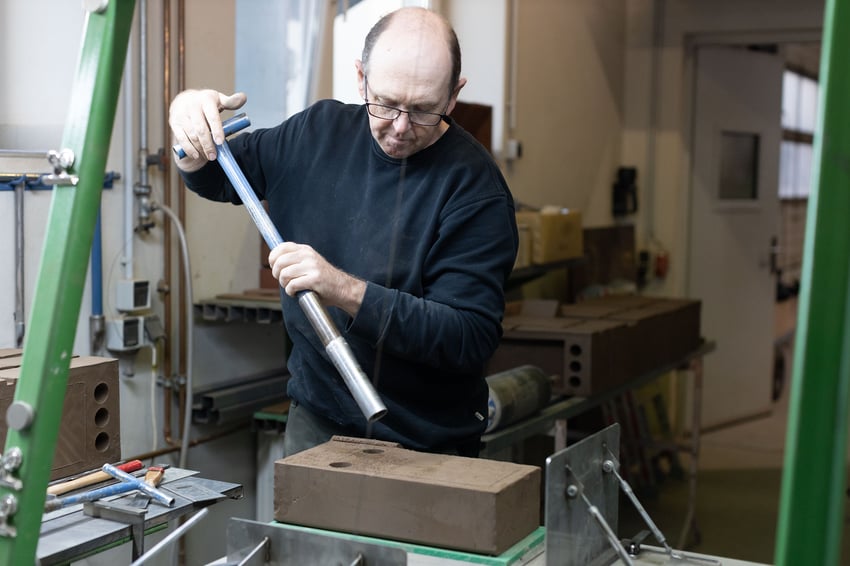
Handcrafting of nesting bricks in the moulded brick factory
Different types of nesting bricks and their areas of application
Hagemeister offers a wide range of nesting brick modules, each optimised for different species and structural requirements. Modules NK1 to NK6 vary in size, shape and design to meet specific needs.
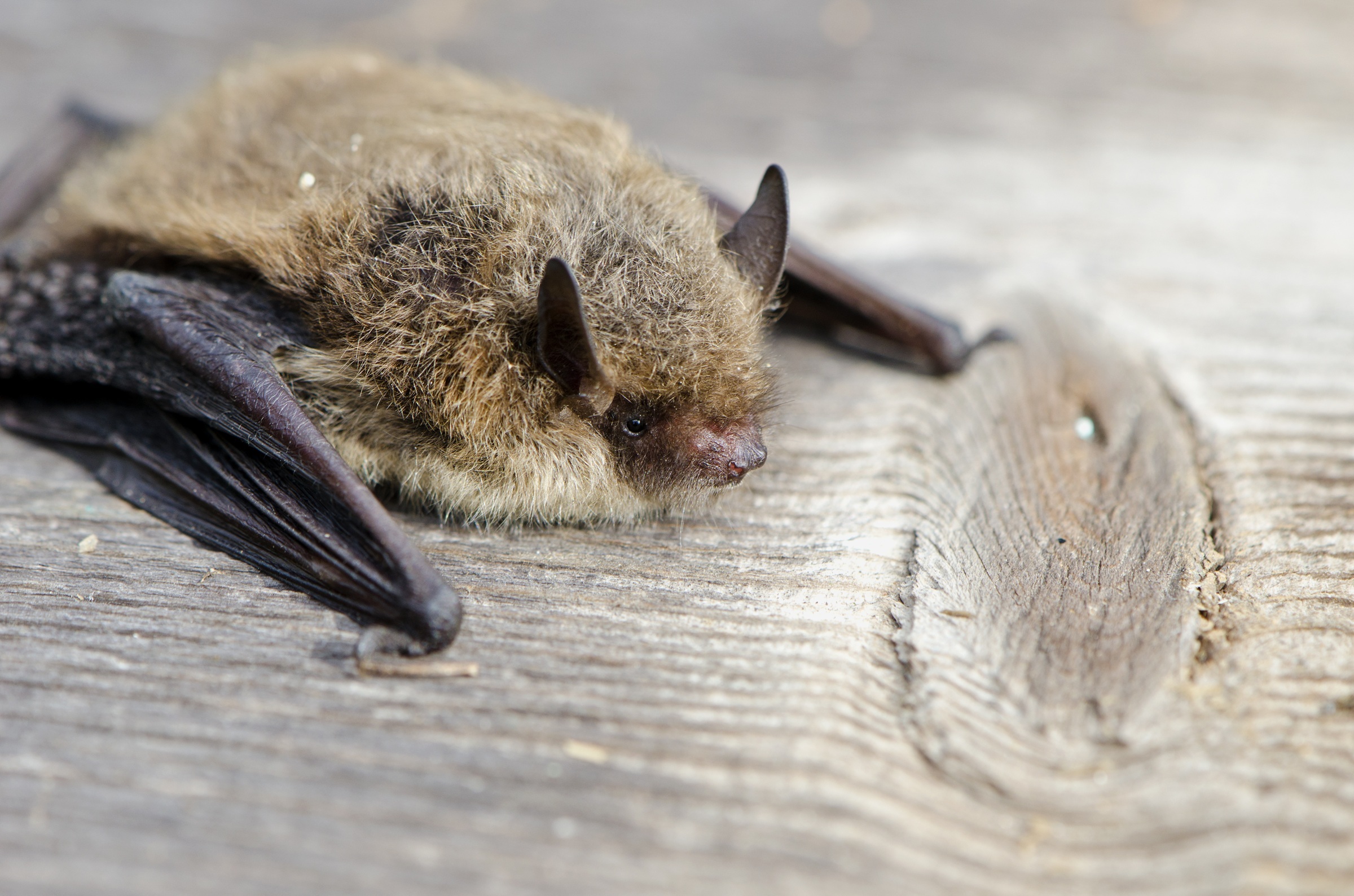
NK1 and NK2, for example, are ideal for smaller songbirds, while NK3 and NK4 are specially designed for larger birds such as swifts. The NK5 and NK6 modules provide suitable shelter for bats. Each module is designed to blend seamlessly into the façade while providing protection and safety for the animals.
Welche Module passen zu welchen Bewohnern?
NK 1 is recommended for swifts, sparrows and tit species:
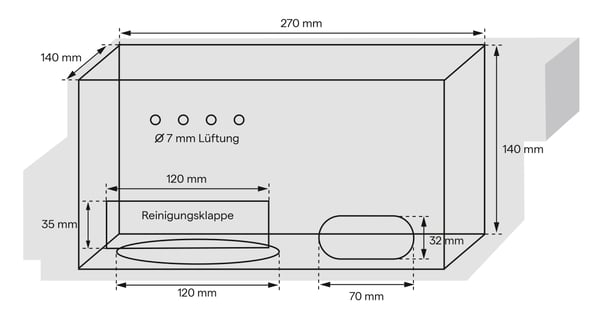
- 170 mm installation depth
- Unscrewable flap (maintenance possible, but not necessary)
- Nesting cavity approx. 120 mm diameter, approx. 15 mm deep, entrance hole approx. 32 × 70 mm
40° approach angle - Ventilation openings
Installation between 8 and 20 m approach height - Unobstructed approach (no trees or bushes in the immediate vicinity)
- Do not install on the south side or only in the shade of the roof overhang, do not place above window and door openings
- Installation of several nesting bricks on the building is recommended, as they are colony breeders
NK2 for wren, black redstart, spotted flycatcher and white wagtail:
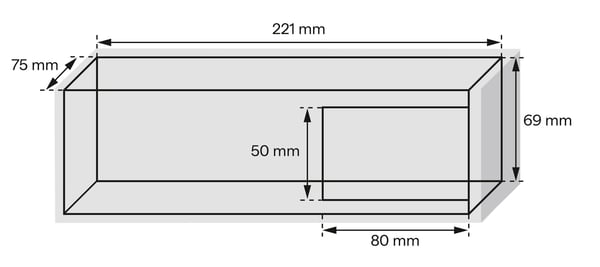
- 115 mm installation depth
Entrance opening approx. 80 × 50 mm - Installation between 1.5 and 3.5 m approach height
- Preferably install in close proximity to trees and shrubs
- Do not install on the south side or in direct sunlight
- Do not place above window and door openings
NK3 for blue tits, great tits, tree sparrows, house sparrows, crested tits, marsh tits, coal tits, pied flycatchers and
nuthatches:
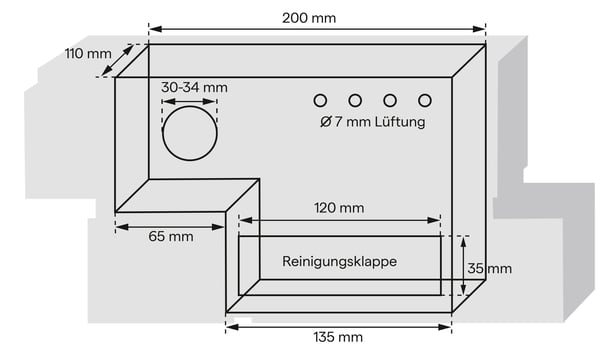
- 170 mm installation depth
- Removable cleaning flap
- Access opening can be adapted to the type of resident
- Entrance hole up to 30 mm -> tit species
- Entrance hole from 34 mm -> house sparrow etc.
- Ventilation openings
- Installation between 1.5 and 3.5 m flight height
- Preferably install in close proximity to trees and shrubs
- Do not install on the south side or only in shaded areas
- Do not place above window and door openings
NK4 for wrens, wagtails and black redstarts:
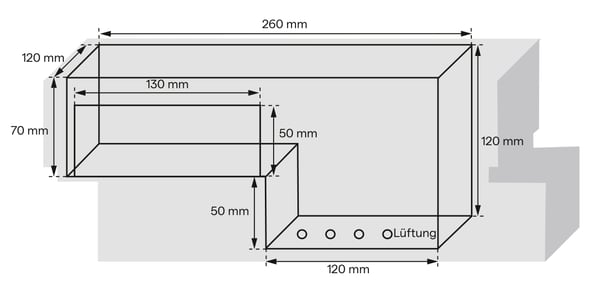
- 170 mm installation depth
- Ventilation openings
- Entrance opening approx. 130 × 50 mm
- Installation between 1.5 and 3.5 m approach height
- Preferably install in close proximity to trees and shrubs
- Do not install on the south side or only in shaded areas
- Do not place above window and door openings
NK5 for pipistrelle bats, grey long-eared bats, broad-winged bats and brown long-eared bats:
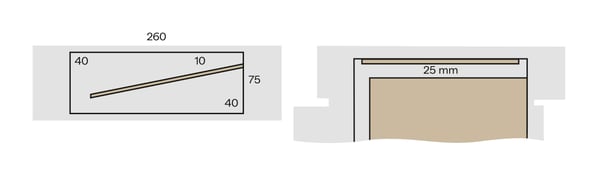
- Bat box (integrated into wall structure)
- 115 mm installation depth
Modular design, expandable to nursery chambers - Self-cleaning, maintenance-free
Can be designed for specific species - Entrance hole approx. 120 × 30 mm
Interior dimensions of standard module, divided into 2 chambers - Wood wool lightweight board across the interior and at the top of the capstone, passage opening from chamber to chamber of 25 mm
- Installation from 2.5 m approach height
- Ensure a clear approach area (no trees, etc.)
- Do not install on the south side or only in the shade of the roof overhang
- Avoid direct lighting on the entrance opening (lanterns, spotlights, etc.)
NK6 for the house martin:
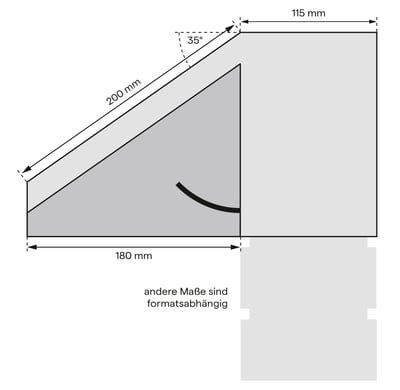
- 115 mm installation depth
- Pre-finished element for walling in
- Nest attachment included, for expansion by the swallow itself (better acceptance)
- 35° roof overhang angle
Two stone variants (corner and centre piece) - Nest attachment made of fired clay, removable, approx. 120 mm diameter
- For dimensions, see drawing in brochure
- Installation approx. 2–8 m flight height
- It is advisable to install several elements next to each other, as Kolonienbrüter
Conclusion
Practical evidence shows how quickly the approach works: In Rhede, 120 nesting bricks were integrated into new residential buildings, and the colony quickly accepted the habitats; proof of occupancy is documented in the project video .
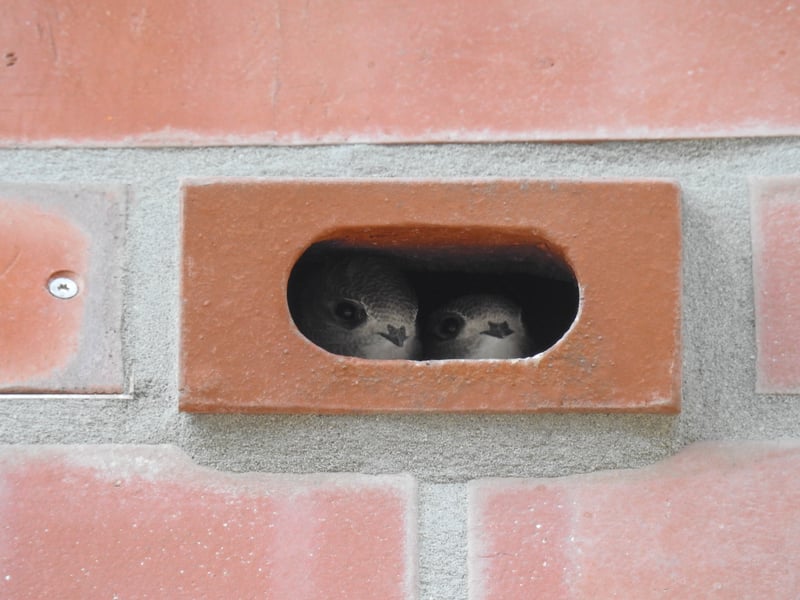
Two almost adult young swifts peer out of the nesting brick on the new building.
In summary: Nesting bricks are an aesthetic, robust and compliant solution for actively incorporating biodiversity into the building envelope. With the right choice of modules, depending on the target species, and careful detailed planning, functional, durable habitats can be created without compromising on design. For specific projects, it is advisable to coordinate installation heights, orientation and approach areas at an early stage; our consultants will be happy to assist you in selecting the right nesting bricks.