



The goal is clear: in the fight against climate change, Germany aims to be climate-neutral by 2045. To achieve this, emissions and resource consumption in the building sector, among other areas, must be reduced. If we want to identify appropriate measures in the construction industry regarding climate protection and resource efficiency, the first question that arises is: Where do building emissions originate?
In the case of operational emissions—CO2 emissions generated, for example, by heat and electricity consumption during the use of a property—this is straightforward. With embodied emissions, it is more complicated. This is because buildings consist of many different construction products and materials. Planners can rely on so-called Environmental Product Declarations (EPDs). These provide transparent, valid data that highlight the environmental properties of building products. Manufacturers such as Hagemeister commission the EPDs.
The goal is clear: in the fight against climate change, Germany aims to be climate-neutral by 2045. To achieve this, emissions and resource consumption in the building sector, among other areas, must be reduced. If we are to identify appropriate measures in the construction industry regarding climate protection and resource efficiency, the first question that arises is: Where do building emissions come from?
EPDs: transparent, third-party verified data
What substances do construction products contain? What resources were consumed during their production, and what environmental impacts did this result in? EPDs provide this information in the form of a life cycle assessment. For example, they quantify the contribution of building materials to the global greenhouse effect or to soil acidification. With regard to the long-term goal of climate neutrality by 2045, the Global Warming Potential (GWP) or CO2 equivalent is a particularly important indicator that construction professionals look to.
Since EPDs are reviewed and verified by independent third parties, they ensure not only the transparency of the data but also its science-based collection and objectivity.
Hagemeister EPD for Upcycled Clinker Bricks
Hagemeister also provides customers with EPDs for its clinker bricks. For example, an Environmental Product Declaration for its upcycled clinker bricks is available in the database of the Institute for Construction and the Environment (IBU). The IBU is one of Europe’s leading program operators for EPDs. The EPD describes the upcycling process of the sustainable clinker, which consists of reused raw materials and embodies key principles of the circular economy.
The EPD reports a carbon footprint of 141 kg CO2 per ton of clinker material for upcycled clinker products. Compared to concrete blocks (typically > 200 kg CO2/t) or clinkers made from conventionally sourced raw materials, this represents a carbon footprint that is up to 30 percent lower.
EPDs do not evaluate; they quantify data
However, EPDs do not provide an evaluation in and of themselves and are not intended for a direct comparison of the sustainability performance of building products. This is because the environmental quality of materials is linked to their functional performance and is essentially determined by the building context in which they are used.
EPDs also take into account the entire life cycle of building materials and are based on life cycle assessments (LCA). This includes data on demolition, recyclability, and landfill requirements. Architects can obtain all this information from the EPDs. In this way, EPDs help decision-makers plan building or renovation projects holistically from the outset and calculate their overall environmental impact. This enables them to reduce environmental risks in construction and promote sustainability in the building sector.
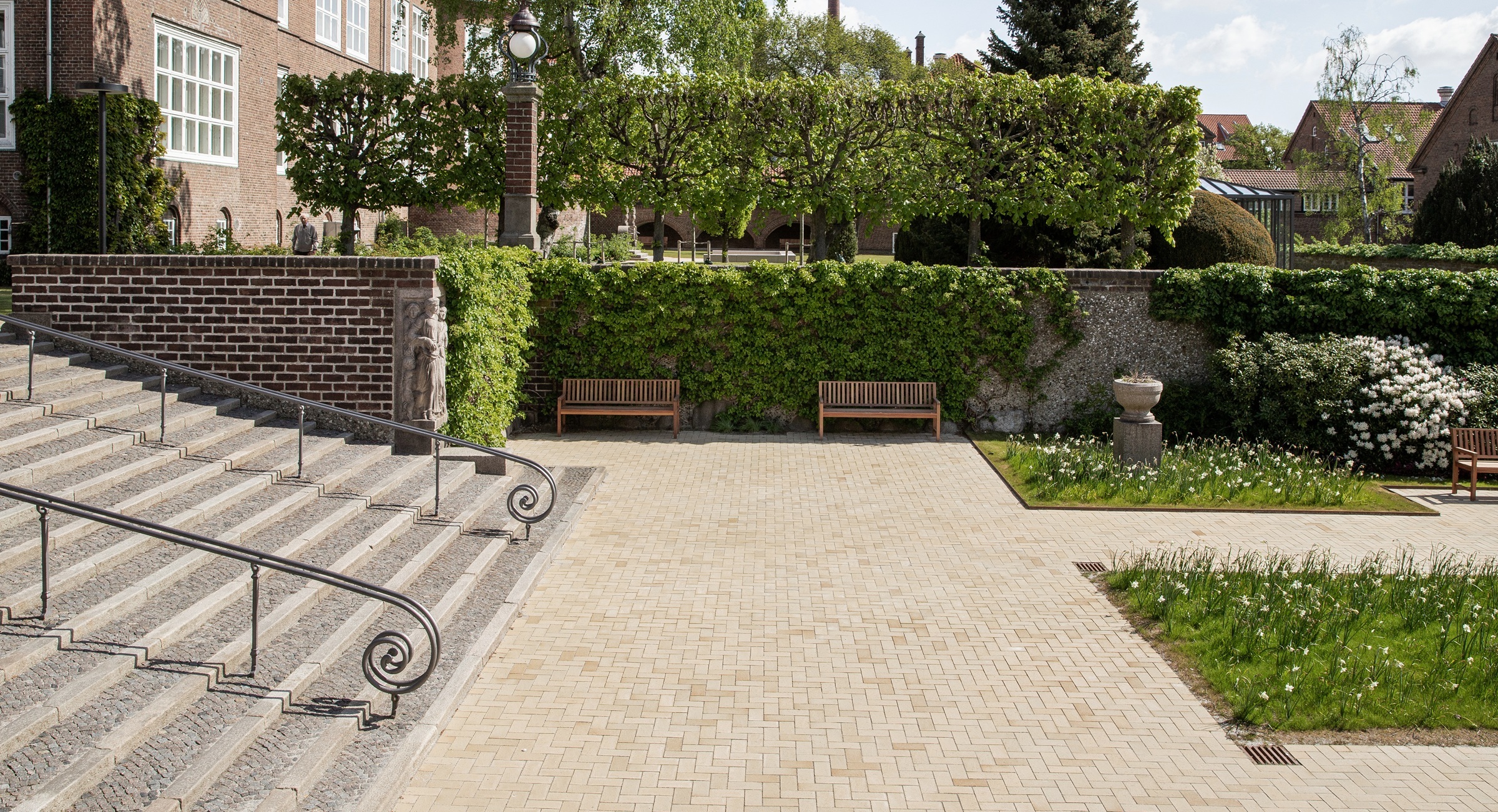
Clinker bricks, for example, stand out for their durability. Weather-resistant and impervious to pests and vegetation, their quality and appearance remain intact for decades.
EPDs provide important data for the Construction Products Regulation
The EPDs are based on the international standard ISO 14025 (for Type III environmental declarations) and the European standard DIN EN 15804 (specifically for construction products). They are supplemented by the standard ISO 21930, which also applies to construction products. The standards define the standardized principles and procedures for the preparation and presentation of life cycle data.
Since EPDs provide standardized information on the environmental impacts of construction products and thus enable the sustainable design and assessment of buildings, they are relevant to the Construction Products Regulation (CPR). The CPP came into force at the beginning of 2025. It is an EU regulation that harmonizes the marketing of construction products within the European single market. Its aim is to guarantee safety, sustainability, and fair competition.
EPDs: Benefits for the climate, planning certainty for project developers, and economic benefits for operators
In addition, EPDs offer further benefits for decision-makers:
-
Environmental Product Declarations provide a scientifically sound data basis for assessing the environmental quality of buildings and renovation projects.
-
This facilitates a holistic assessment and is a prerequisite for sustainability evaluations by building certification systems such as BREEAM (Building Research Establishment Environmental Assessment Methodology), the German Sustainable Building Council (DGNB), or Leadership in Energy and Environmental Design (LEED).
-
Many bidding processes now require sustainability certification for buildings.
-
Better environmental performance, enhanced reputation, and lower operating costs: Investors rate certified buildings more highly than conventional construction projects.
EPDs can optimize internal production processes
Where can raw materials be saved? Where can emissions be further reduced? The measurable data from life cycle assessments can serve as a starting point for optimizing the internal production processes of building products by identifying further opportunities for sustainability. This makes them an important tool for helping building product manufacturers make their portfolios more environmentally conscious.
Manufacturers can commission different types of EPDs. For its upcycled clinker bricks, for example, Hagemeister had a product-specific EPD prepared. In addition, there are EPDs for entire product groups of a building materials supplier and environmental product declarations for product groups spanning multiple manufacturers.
Fazit
EPDs provide transparency regarding the environmental impacts of building products. They thus provide reliable data for the planning and environmental assessment of construction projects, thereby helping construction professionals make more sustainable decisions. In this way, EPDs contribute to transforming the construction sector on the path to climate neutrality by 2045.
Sources
Institut Bauen und Umwelt e.V. | Das Detail im Fokus. Das Ganze im Blick.
DGNB Analyse zeigt: Relevanz von Umweltproduktdeklarationen nimmt deutlich zu | DGNB