


.jpg)
The common swift is a unique bird that spends most of its life in the air—outside of the breeding season, they spend around ten months in the air almost nonstop!
Yet despite this impressive way of life, this bird is coming under increasing pressure. Ongoing urbanization, modern construction methods that lack nesting sites for birds, and the effects of climate change are causing its habitat to disappear.
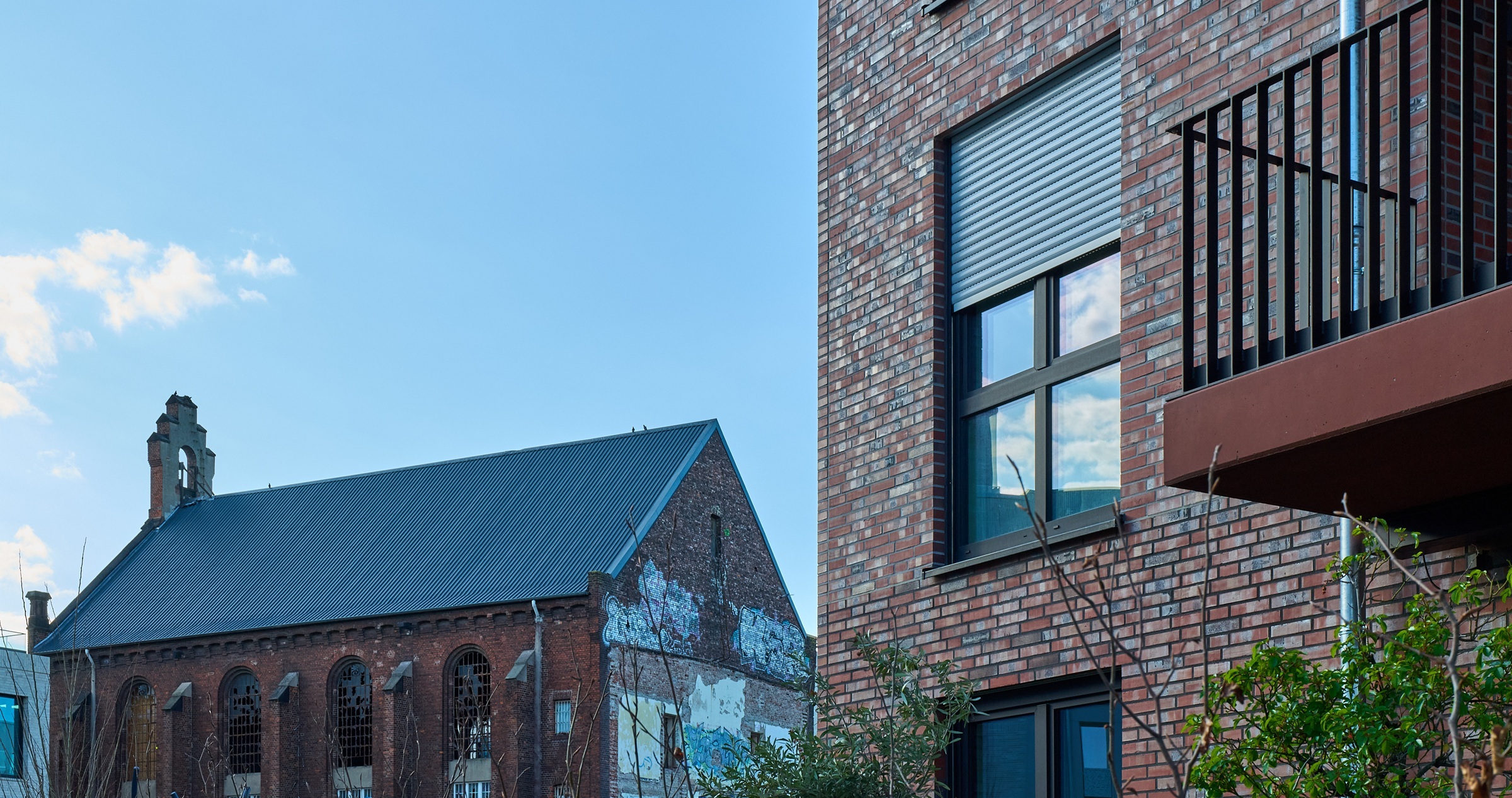
As a classic building nester, the common swift prefers cavities in old buildings such as church towers, train stations, or residential buildings.
At the same time, new buildings with smooth facades and sealed exterior envelopes offer hardly any suitable nesting sites for urban birds, while extreme weather events such as heat waves and heavy rain further complicate its search for food.
As a company specializing in high-quality clinker facades and sustainable construction, protecting biodiversity is particularly important to us at Hagemeister. With our special nesting clinker bricks, we offer innovative solutions to provide safe nesting sites for building-nesting birds, such as the common swift, even in modern cities. Species conservation is not a marginal issue, but an essential task for sustainable urban development. By integrating nesting opportunities into architecture, we can not only preserve biodiversity but also make an important contribution to the ecological balance in urban areas.
Why is protecting the common swift so important for biodiversity? What role does this special bird play in the urban ecosystem? And what measures can cities, architects, developers, and private individuals take to support this endangered synanthropic species? In this interview, Aline Förster from the NABU Nature Conservation Station Münsterland provides fascinating insights into the challenges of species conservation and highlights how sustainable construction projects, targeted conservation measures, and collaborations with companies like Hagemeister can help ensure the long-term survival of the common swift.
Interview
Why does the common swift rely particularly on conservation measures in urban areas?
Aline Förster: The common swift is a fascinating synanthropic species whose way of life is closely linked to human structures. Originally, these birds nested on cliffs and occasionally in tree hollows, but nowadays they use buildings almost exclusively as nesting sites. Unfortunately, modern construction methods offer fewer and fewer suitable niches or cavities, which threatens the survival of these animals. Since swifts are very site-faithful and return to the same nesting sites every year, it is essential to create alternative nesting sites when old nesting opportunities are lost.
What role do swifts play in the ecosystem, and why are they so important for species conservation as synanthropic birds?
Aline Förster: Common swifts play a vital role in maintaining the ecological balance in urban areas. They feed primarily on flying insects such as aphids, mosquitoes, and flies. In doing so, they help keep insect populations under control and can prevent infestations. At the same time, swifts themselves are part of the food chain and serve as prey for birds of prey such as peregrine falcons. This dual role makes them an important species for biodiversity in urban ecosystems.
How does the common swift differ from other urban birds, such as the swallow?
Aline Förster: Swifts differ from swallows in several ways. They have dark plumage—unlike swallows, they do not have a pale belly—and long, sickle-shaped wings, which they need to spend almost their entire lives in the air. As long-distance migrants, they spend time in Central Europe only from late April to early August and, unlike swallows, raise only one brood. Furthermore, they leave hardly any traces at their nesting sites, and their distinctive “sri-sri” call can often be heard high in the sky on balmy summer evenings.
What are the main reasons why swifts are becoming increasingly rare in many cities?
Aline Förster: The loss of suitable nesting sites is a major problem. Old buildings are being demolished, and during roof and facade renovations, species conservation is often not given sufficient consideration, even though it is required by law. Modern new buildings with smooth facades and hermetically sealed roof areas offer no nesting opportunities for building-nesting birds from the outset.
To what extent do climate change and urbanization affect the habitat and behavior of swifts?
Aline Förster: The increasing loss of open land is forcing swifts to travel longer distances in search of food. Extreme heat can cause nesting sites to reach life-threatening temperatures, while prolonged rain and cold drastically reduce the food supply. Adaptations such as the ability to enter a state of torpor demonstrate just how resilient these animals are—yet they still need our support.
How does NABU support the protection of swifts?
Aline Förster: NABU is committed to protecting swifts in a variety of ways. These include public outreach activities such as lectures and field trips, population counts, collaboration with local nature conservation authorities, advising building owners, and installing nesting aids. Local projects such as the “Species Protection on Buildings” program run by the NABU Nature Conservation Station in Münsterland or the banding of swifts by NABU Hamburg are examples of successful initiatives.
In your opinion, what advantages do nesting bricks, such as those made by Hagemeister, offer to swifts?
Aline Förster: When installed in the right location on a building, nesting boxes provide an ideal breeding site for swifts. They can be easily integrated into building facades and are well-ventilated. A cleaning hatch allows for maintenance when necessary, and the design is tailored to the swifts’ foraging behavior. Additionally, they prevent street pigeons from nesting in the boxes.
How important is collaboration with companies like Hagemeister for species conservation in cities?
Aline Förster: Partnerships between conservation organizations and industry are becoming increasingly important. Companies can not only optimize their products but also support species conservation through public outreach and monitoring. This collaboration creates win-win situations: it promotes biodiversity while simultaneously increasing the visibility and demand for innovative products.
What should people do if they find an injured or weak swift?
Aline Förster: If you find a swift sitting on the ground, it is essential to bring it to safety. Place it in a cardboard box with air holes, lined with a towel, so it can recover, and weigh it if possible. If it weighs less than 20 grams, it urgently needs help. Find a foster home or contact organizations such as the Frankfurt Swift Clinic, which arranges foster homes throughout Germany, or Nestwerk Münsterland.
Nestwerk Münsterland: please send a photo via WhatsApp to 0176 21388851
NABU Nature Conservation Station Münsterland: 02501-9719433 / Mauersegler@nabu-station.de
What other steps can cities and architects take to protect swifts and other endangered species?
Aline Förster: Biodiversity should be a central aspect of urban development projects. This includes measures such as efficient land use through high-rise and multi-family buildings, green facades, the integration of nesting aids, and the use of native plant species in green spaces. Urban planning competitions could also place a stronger focus on sustainability and species conservation to promote innovative solutions.
The NABU Münsterland Station is committed not only to birds such as the common swift but also to other endangered species, such as bats. These animals, often referred to as “flying insect catchers,” are essential for a healthy ecosystem. But like birds, bats also face major challenges, as their natural habitats are being destroyed by human activity.
An important aspect of the station’s work is the implementation of species conservation measures in urban habitats. This is not just about preserving individual species, but about promoting biodiversity as a whole. Contrary to popular belief, cities can be hotspots of biodiversity if they are designed properly.
The NABU station advocates for sustainable construction and views it positively that companies like Hagemeister, with their Nistklinker product, demonstrate that this is not only possible but also looks appealing and fulfills its purpose. Projects that create nesting opportunities have a positive effect on biodiversity and help make our cities more livable.
Conclusion
The fact that the common swift is a species in need of protection highlights how important it is to combine sustainable construction with species conservation. Especially in urban areas, targeted measures such as the integration of nesting bricks can make a decisive contribution to biodiversity. We all share a responsibility to combine modern construction methods with ecological solutions to safeguard the habitats of endangered species.
If you’d like to learn more about how sustainable architecture and species conservation can be combined, we recommend our in-depth blog post “Species Conservation Through Architecture: Sustainable Building with Hagemeister and NABU.” There, we highlight concrete and accessible ways in which builders, planners, and municipalities can actively contribute to preserving biodiversity.
In addition, we offer a comprehensive white paper on the topic of nesting bricks. In it, you’ll find valuable tips on sustainable building, the protection of building-nesting birds, and ecological aspects that are essential in new construction to ensure long-term harmonious integration into the ecosystem.