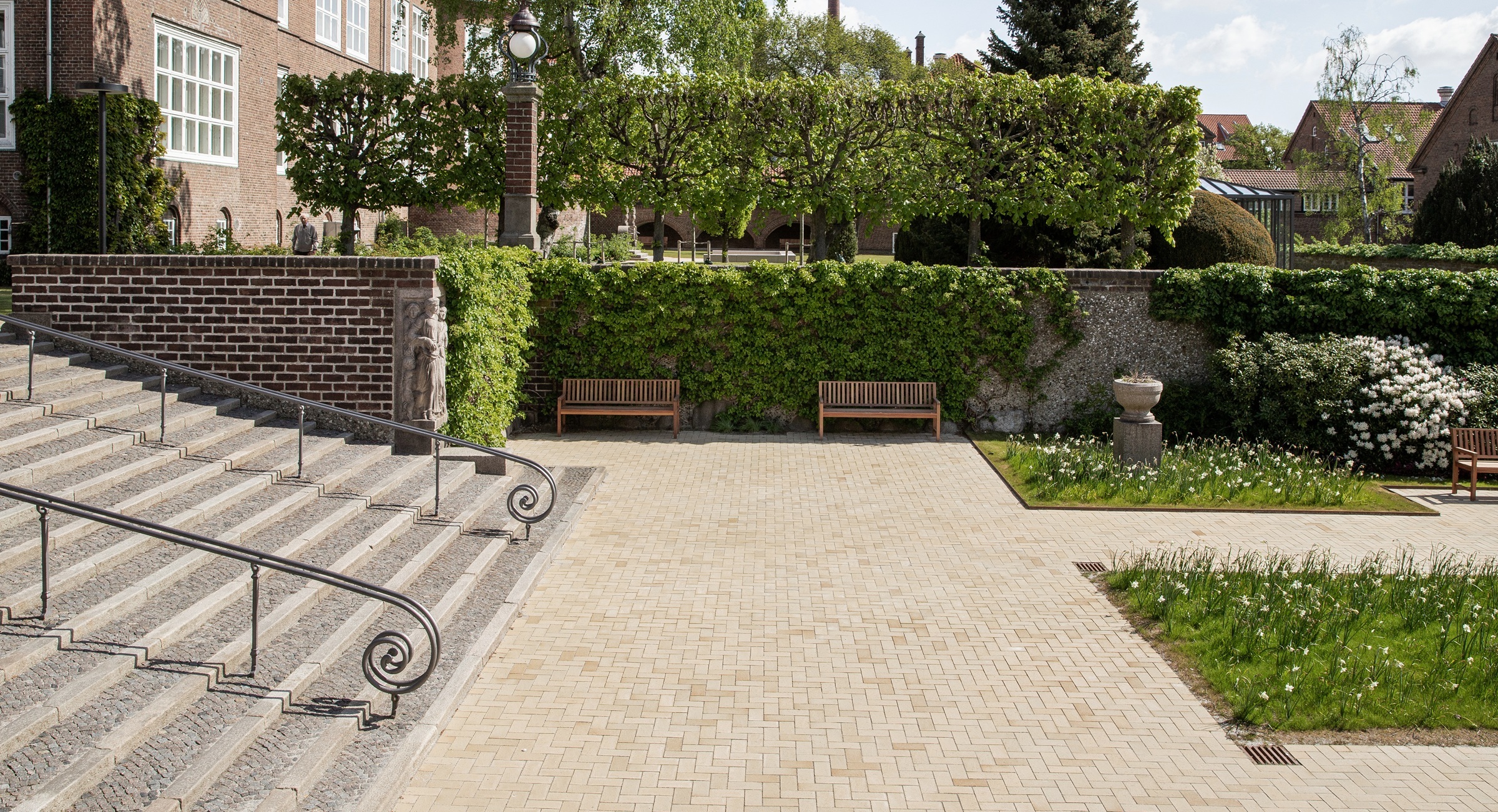




Greater competition and safety in the construction sector through common rules and support for sustainable and circular business models: these are the key objectives of the new EU Construction Products Regulation (EU CPR). The revised regulation entered into force in early 2025 and will apply in all EU member states starting January 8, 2026. The benefit for architects and building owners: The new CPR introduces mandatory environmental information—such as CO₂ emissions and energy consumption over the entire life cycle of a construction product. This helps project developers make decisions that reduce the environmental footprint of buildings and improve their life cycle assessment.
As a result, environmental information can play a central role as early as the design and tendering phases. Products with similar performance can be more easily compared based on environmental criteria, such as recyclability. This facilitates sustainable material decisions and supports compliance with reporting requirements under ESG and green building certifications.
Key Changes in the Construction Products Regulation
The revised regulation introduces a series of concrete measures designed to make the European construction sector more modern, safer, and more sustainable. These measures improve and accelerate the harmonization of rules for construction products, thereby promoting free trade and safety in construction projects. The changes include, for example:
- Improved market surveillance makes it easier to identify products that do not comply with the rules. Such products are prevented from entering the market, which enhances quality and safety in construction. This strengthens the confidence of planners and architects in construction products bearing the CE marking.
- In specific cases, the European Commission can now establish technical requirements directly through legislative acts.
An expert group simplifies the standardization process and is designed to involve all key stakeholders. - The new rules now also apply to areas such as online commerce, 3D printing, used construction products, digital information, and products for immediate installation.
In addition, the regulation also establishes basic requirements for the performance of construction products in terms of energy efficiency and resource conservation. Information on greenhouse gas potential will become mandatory starting in 2027. As a result, environmental information for harmonized construction products—that is, those subject to uniformly defined requirements across the EU—will become a legal obligation for manufacturers in the future. This information is disclosed methodically via so-called standardized Environmental Product Declarations (EPDs), which Hagemeister has already prepared for many of its products, such as its upcycled clinker bricks.
According to the Construction Products Regulation, public procurement should also give greater consideration to sustainable construction products. This is another approach to promoting environmentally friendly and circular business models in the construction sector and supporting the goals of the European Green Deal.
For planners, this creates a higher degree of planning certainty: uniform technical standards and verified product information reduce the need for clarifications during tenders and approvals. At the same time, it becomes easier to specify construction products with comparable performance across the EU—an advantage for international projects and contracts.
The Digital Product Passport ensures transparency in the supply chain
Another new feature is the Digital Product Passport (DPP). It provides project managers with standardized digital information covering the entire life cycle of a construction product. This includes data on environmental impacts as well as reusability and recyclability. In this way, the Construction Products Regulation (CPR) creates greater transparency throughout the entire value chain of construction products.
However, the transition period for the introduction of the Digital Product Passport is 15 years. Therefore, it will still be some time before designers and building owners can use it.
In practice, the Digital Product Passport will open up entirely new possibilities in the future. Designers will be able to access all relevant product data via a scan or digital link—from performance values and environmental data to dismantling and recycling information. This will make the integration of material data into BIM models and sustainability assessments significantly easier.
Uniform standards for construction products facilitate the free movement of goods within the EU
Even before the amendment, the Construction Products Regulation had been governing the marketing of construction products in the EU internal market for more than a decade and had established uniform standards for this purpose. The aim is to ensure harmonized quality characteristics regarding aspects such as structural stability, fire resistance, and sound insulation, as well as their verification, across the EU.
In this context, the Construction Products Regulation provides the framework within which EN standards (harmonized technical specifications) describe the properties of construction products so that they can be purchased on the European market.
Products with the CE mark have access to the EU market
The Construction Products Regulation (CPR) also serves as the legal basis for the CE marking of construction products. This marking indicates that the product in question meets all relevant EU legal requirements and complies with applicable standards. In order for manufacturers such as Hagemeister to sell these products throughout the EU, they must also prepare a Declaration of Performance for the construction products. With the Declaration of Performance (DoP), they assume responsibility for their products and declare their conformity. The DoP must list all essential characteristics and performance features of the products. Planners and building owners use the Declaration of Performance as proof of product quality and can access it online. For example, via the product search on the Hagemeister website, where you can find all CE markings for the clinker bricks and the corresponding Declarations of Performance.
“DPP: Architects and planners can better compare building products and make environmentally sound decisions.”
The new Construction Products Regulation is transforming the construction industry. How is Hagemeister preparing for the Digital Product Passport, for example?
Hagemeister: Among other things, the new Construction Products Regulation (CPR) rules are intended to promote greater transparency, traceability, and sustainability—by providing precise information on the technical and environmental characteristics of construction products. This information is provided by the Digital Product Passport (DPP). This enables architects and planners to better compare construction products and make more environmentally friendly decisions. This helps the construction industry become more sustainable, conserve resources, and reduce CO₂ emissions in the long term.
To prepare for the Digital Product Passports, we are, of course, continuing to adapt our internal structures. The goal is to capture and document the relevant information. Additionally, we are implementing methods that allow for corrections. Step by step, we are making our IT systems ready for these tasks. However, since we have been commissioning standardized EPDs for our clinker bricks for years, we are well-prepared. EPDs provide transparent, valid data that outline the environmental properties of construction products.
The DPP is driving digitalization in the construction industry. Why is this important?
Hagemeister: The DPP serves as the foundation for a standardized digital data structure. This is essential for what is known as Building Information Modeling (BIM). BIM is a digital, model-based process that allows all project stakeholders to collect and manage key building data across its entire lifecycle within a single, centralized model. On the one hand, BIM contains geometric data. On the other hand, it also includes data on materials and costs. By integrating energy-related data, BIM helps, for example, to construct energy-efficient buildings. Since everyone can access this data, BIM promotes collaboration. The centralized collection of data also makes it easier to identify potential problems early on and avoid planning errors.